

Anomalies Update
Welcome to Field Notes from the Beyond!
We’ve talked about our Anomalies research project before, but we’re going to talk about it again! Back in December, we let you know a little bit about what our participants have been telling us. If you didn’t get a chance to take a look at that, go back to our December 31 newsletter!
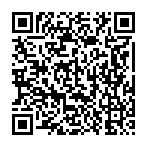
We’ve hit a bit of a brick wall and need your help! We really want to collect as much information as we can so that we can turn this into a great resource for everyone. Unfortunately, we haven’t been able to recruit more people into the study. We’re stuck. Please help us recruit more people into the study! Here’s the link:
https://redcap.lehigh.edu/surveys/?s=8W4KMN3P7PJWEJXM
And the QR Code:
And here’s the answers to some questions we’ve been asked about the study. If you think you’ve seen these answers before, you have, but they bear repeating.
Who are you anyway? What’s your background?
We are anthropologists! For our day jobs, we research and teach college students. We told you a bit about anthropology in our very first issue of Field Notes from the Beyond and more on our first two podcast episodes. For 15-30 years (there’s more than one of us😊), we’ve been investigating the paranormal both as researchers and as enthusiasts. We’ve now decided to really lean into it from a research perspective, using the tools we’ve learned over the years.
You can learn more about us on our Patreon page for our Podcast, Beyond the Human: https://www.patreon.com/c/beyondthehuman/about
Listen on Spotify, Apple Podcasts, or wherever you get your podcasts! You can learn more about Ryan on his website: ryangoeckner.com. If you want to learn more about Chris, you’ll have to wait until she gets off her a** and creates a website!
Why should I be willing to talk to you?
Because we’re really nice people, we swear! Honestly, we understand if you’re hesitant to talk with us. These are very personal and possibly sensitive topics and you don’t know us. Please listen to our podcast episodes, read our substacks, and get to know us if you’re worried about what kind of people we are. Feel free to message us through any of our socials and we’ll try to assuage your fears.
Please know that we will do everything in our power to make you comfortable with the interviews. You can choose to answer or not answer any questions. You can stop the interview if it makes you uncomfortable. You can have someone online with you during the interview if that helps. If there’s something else we can do to make you more comfortable, just let us know and we’ll do everything we can to make it happen.
Where did you get all of these questions?
Some of the questions we designed ourselves because they didn’t exist anywhere. Some of them we took from other people who have created questions about these topics, mostly other anthropologists, parapsychologists, and psychologists, but not exclusively. Some of them are not “paranormal” questions specifically, but instead are questions about related topics, like beliefs about death and the afterlife. Please suggest other batteries of questions or “measures” if you know of any that might be good! We will consider them for the future!
Why is some of the wording on the questions weird?
Really good question! Some of it, we’ll take the blame on. The ones we created ourselves we tried to word the best we could, using 45 years of combined experience. We’d like to believe we did a pretty good job on them, but the reality is that you can always tweak wording to make it better and everyone (yes, all researchers included) sometimes words things poorly and they need to be fixed. Sorry and we will work on that.
The questions we took from others, we trusted their wording. In some cases, we didn’t even necessarily agree with it, but we trusted that they had done the work to figure out the best wording. It’s important to recognize that, in some cases, the wording has been formally tested through some rigorous statistics known as psychometrics. In this case, you can’t really change the wording because it invalidates the list of questions. (We’ll admit, we’ve taken some liberties on things like that in the past when we’ve REALLY disagreed with something, but we do rerun psychometrics when possible.) The same caveats apply to those “others” that apply to us in terms of things sometimes just needing to be fixed. All research should be viewed as work in progress.
If you’re curious about psychometrics, here’s a video:
Are you going to take all of this information and publish something about how weird and/or mentally unstable people who believe in the paranormal are?
NO!! Let me say that again – NO!! We have absolutely no intention of using this research to make people look mentally unstable or anything like that. This is about documenting beliefs and experiences. We, as anthropologists, believe that anything you tell us you experienced was 100% real to you and should be documented as such. We will not judge you and will not write up research results to try to make you look bad.
Besides, if we did that, we would be making ourselves look weird and/or mentally unstable. And if we are either of those things, it has nothing to do with our belief in the paranormal!
Will the results be made public?
Yes, absolutely! But not immediately. We will leave the surveys and interviews open for three months and will then look at the results. We won’t look at them before then. Once we do look at them, we will create some reports on the results and make them available freely on our website. We will also put together some academic papers and maybe some books, depending on what we learn. Academic papers are only public if the journal allows it, but we will make sure that the results from the papers, if not the papers themselves, are available. Regardless of how we get the information out there, it will take a bit of time, so we’ll make sure to let everyone know our progress and when we think results will be available.
Will the data be open access?
Sort of. We will not put the full database online for anyone to download all raw data. This is out of respect for all of your beliefs, experiences, etc. We don’t want any identifiable data to be readily available online. If you want to do some analysis on your own, we want you to be able to do so. To facilitate this, if you want access to raw data, we will ask you to sign a data sharing agreement. This agreement will have some rules you have to follow, mostly about confidentiality and anonymity, but also about attributing the data to our group. This is pretty standard for sharing academic data. We are housed at a university (i.e. the data are behind firewalls at our university on their secure server), so we need to make sure we follow all of those types of rules.
We hope this is useful information. Please feel free to ask us other questions you may have. And – please participate and ask your friends and family to participate! Help us build the largest database of paranormal, supernatural, and anomalous phenomena ever!
Coming Up Next
Next in Field Notes from the Beyond: Defining the Paranormal
This Month on Beyond the Human: Exorcism
Who are we?
We are a group of scholars interested in understanding paranormal, supernatural, and anomalous phenomena from an academic perspective. We want to document and validate experiences people have and study them in a rigorous way to bring credibility to these phenomena. Join us for our monthly podcast Beyond the Human and follow us on Spotify, Instagram, and Patreon to learn more about who we are, our methods, and what we want to learn!